Enterprise AI in 2026: What's Working, What's Not, and What's Next
Everyone has an opinion about enterprise AI. Very few are building it.
There's no shortage of AI commentary right now. Analysts publish frameworks. Consultants share decks. Vendors make promises. But the view looks different when you're the one actually building and deploying AI agents inside corporations. That's where we sit. And after a year and a half of conversations with CTOs, CIOs, and IT directors, we wanted to share what the market actually looks like from here.
What we hear from enterprise every day
We talk to CTOs, CIOs, and IT directors across mid-size and large companies. Different industries, different levels of AI maturity. But the same patterns keep showing up:
The DIY camp. "Our team will build an agent in three months." They spin up a prototype, demo it, everyone claps. Then reality hits: edge cases, token costs, security gaps, users who won't touch it.
The wait-and-see camp. "Let's hold off until AGI solves everything." Meanwhile, the smaller group of companies that started implementing step by step are already seeing real results.
The fear camp. "AI is risky. Our data could leak." Valid concern. But standing still has its own cost, and it's harder to spot until it's too late.
None of these are entirely wrong. But none are quite right either.
The add-on lesson nobody expected
When we started Youkeeps, people kept telling us that add-ons improving how people interact with existing products like M365 weren't needed. Easy to copy. Big platforms will just build it themselves.
That turned out to be wrong.
Ecosystems can't support that volume of specialized products. They definitely can't copy them all. It makes more sense to focus on core infrastructure and let thousands of developers handle industry-specific improvements within clear rules. Apple figured this out with the App Store. Microsoft is heading the same direction with its agent marketplace.
And those "unnecessary" add-ons? They became the natural foundation for AI agents, complementing large corporate LLMs. What looked like a small bet turned into something much bigger.
Where we see the market heading
Based on what we observe working with enterprise clients every day, a few things are becoming clear:
In-house agent development is a trap for most. The costs are hidden and the expertise required keeps growing. For the majority of companies whose core business isn't AI, buying from specialized vendors is the faster and safer path.
Adoption is the real bottleneck, not the technology. We've seen products rejected before anyone even tried them. Implementation fatigue, fear of replacement, and lack of habit formation kill more AI projects than bad engineering.
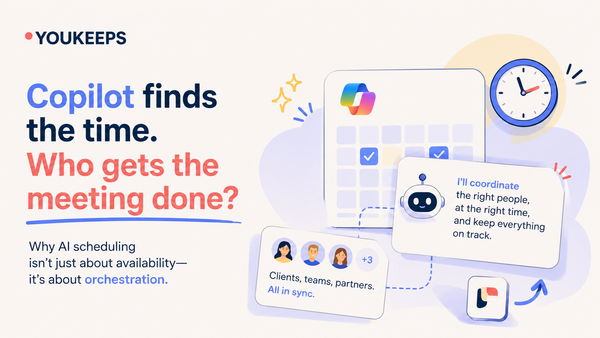
Copilot will become the single entry point. Microsoft is quietly building the infrastructure for agent orchestration inside Teams. One app, one chat, thousands of agents behind it.
AI authorization is the next Big Tech battleground. Whoever owns the user's digital identity across all devices gains an enormous advantage. This fight is just getting started.
The real risk nobody talks about is the asymmetry of attack and defense. AI makes attacks cheaper and faster. Corporate defense is still slow, bureaucratic, and underfunded. That gap is growing every day.
Why we're writing this
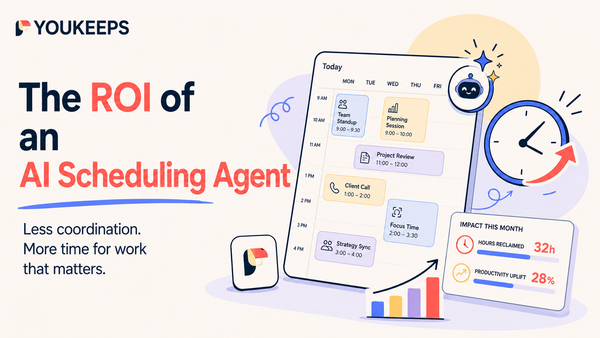
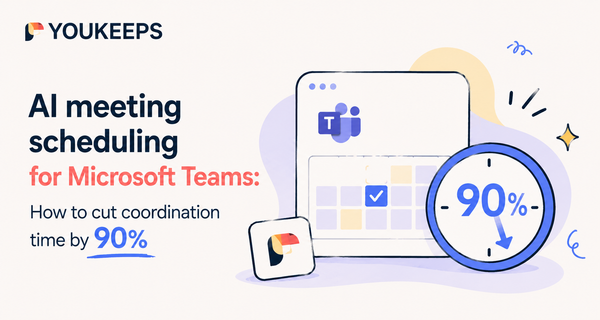
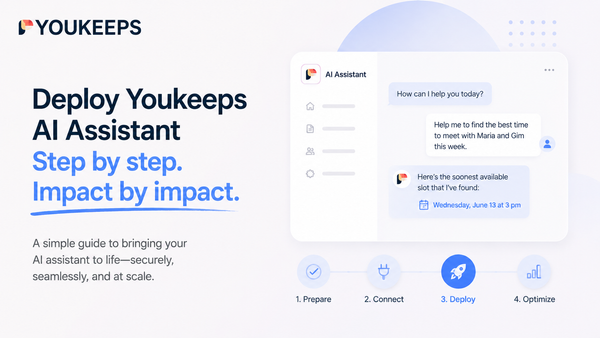
We're not analysts looking in from the outside. We build an AI scheduling agent for enterprise. Every day we deal with the same challenges we write about: token optimization, user adoption, security audits, M365 integration.
This is our honest take from inside the market. We see what works, what breaks, and what keeps enterprise leaders up at night. Some of what we write here will age well. Some probably won't. That's the point of putting it out there.
If you see things differently, we'd genuinely like to hear it. The clearest thinking comes from disagreement, not consensus.
References: a16z Enterprise AI 2025 | a16z Notes on AI Apps in 2026
About Youkeeps: We build an AI scheduling agent for enterprise, integrated with Microsoft 365 and Copilot. Learn more →